The Setup
“Motivation is a mood. A system is a decision you only have to make once.”
This is a workbook. You write in it or you wasted your time. Four months in, you know that. Month 1 you picked the ONE Thing. Month 2 you took the hours back and signed a charter. Month 3 you made it visible — and if you did that properly, the asks started coming. More gigs, more DMs, more people who want a piece. Visibility brings load. And load is exactly where willpower quits.
By the end of this month you walk away with one page that runs your day whether you feel like it or not: your Operating System. Morning non-negotiables, the deep block, the shutdown, the weekly review — signed and dated. Not a routine you try. A system you run. It's what makes November possible, because you can't execute a plan if the day underneath it keeps collapsing.
You can do this on the page, download it, or have it sent to you. However you run it is fine. What matters is that you actually do it.
This is Month 4. If you landed here first, start at G — the Deep Block in Exercise 3 builds directly on the block you made in O. The modules don't expire and the arc builds on itself: G → O → L → D → E → N.
Reality Check
Last month you got findable. You wrote a positioning statement, you showed the work, you built the room on purpose. So here's what nobody tells you about being findable: people find you. The DMs double. The “quick favour” count triples. The promoter you've wanted for two years finally replies — the same week you've got three edits due and a set to prep. Every one of those is a good problem. Right up until the standards you signed in August start bending under the weight of them.
Here's the pattern. You're disciplined when you're fresh. First week of the month the block's protected, the phone's in the other room, you're in bed on time. Then a gig runs late, a client goes sideways, you skip once — and by week three you're negotiating with yourself every morning about whether today counts. That's not a character problem. That's a design problem. You built your good days on how you felt, and feelings don't survive contact with October.
So this month we stop asking willpower to do a job it was never built for. Willpower is a battery. It drains every time you decide — work now or later, open the app or don't, answer it or leave it. By 4 p.m. you've made three hundred decisions and you've got nothing left for the one that matters. Discipline isn't more willpower. It's fewer decisions. You decide once, you write it down, and the system decides for you on the days you'd have decided wrong.
And here's the part this crowd needs more than any other: the system includes rest. Not as a reward — as a component. The people who burn out aren't undisciplined. They're disciplined about output and completely undisciplined about recovery, and they call the crash “paying dues.” Holiday's word for the whole virtue isn't grind. It's temperance. Balance is the discipline. Running yourself into the ground and calling it hustle is just a mood with a work ethic.
[FROM ME — your story for this month. This is the part where you go first, before asking the reader to. In G it was the whiteboard that looked organised and wasn't. In O it's the calendar full of everyone else's priorities. In L it's the room you were leading without realising. For D it needs to be: the stretch where motivation ran out and only a system would have saved you — the month the bookings doubled and the edits stopped, the week you skipped the block once after a late gig and didn't open the project again for three weeks, the morning you realised you'd been deciding whether to work every single day instead of deciding once. Name the gig. Name what you skipped and what it cost. End on the line that becomes this month's pull quote — the two-part snap: what you thought the problem was / what it actually was.]
One more thing before the work. Discipline is the month people fake best, because everybody has a morning routine they describe better than they run. So nothing here asks what you plan to do. It asks what ran — how many deep hours, which non-negotiable held on the bad day, whether the shutdown happened. Numbers, not intentions. If that feels cold, good. Moods are warm. Moods are the problem.
Name it, go deep, balance it. That's the month. The work below walks you through all three and ends with a one-page operating system with your name on it.
Phone in another room. Not as a tip this time. As the first rule of the system.
The Blueprint
Three books built this month — one names the enemy, one hands you the method, one stops you turning the method into a way to hurt yourself. You don't need to read all three right now, though they're worth it. Here's the single playbook they make when you stack them.
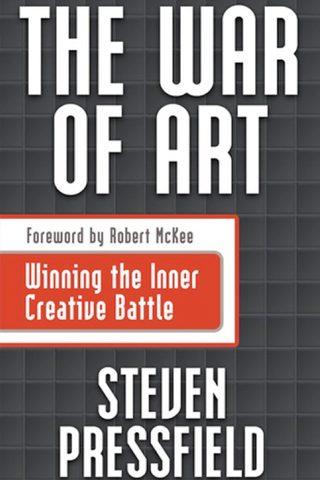
The enemy. Pressfield gives the thing that stops you a name: Resistance. It’s internal, it’s relentless, and it aims hardest at the work that matters most. The amateur negotiates with it. The pro shows up anyway, every day, and treats it like weather.
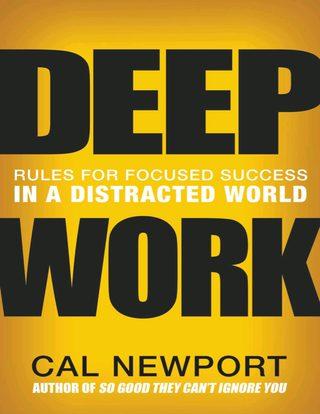
The method. Focused, distraction-free work on the thing that’s actually hard is rare, valuable, and trainable. Everything else is shallow — and shallow fills whatever space you leave it. Build the ritual, schedule the block, drain the shallows, shut down on purpose.
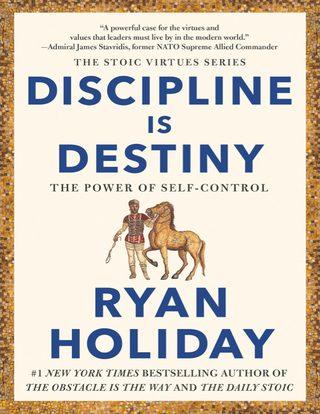
The philosophy. Discipline isn’t hardness, it’s temperance — body first, then mind, then the rest of you. Holiday keeps the part grinders skip: rest, restraint, knowing when to stop. If your standards make you quit when you miss, you don’t have standards. You have excuses.
How they stack: The War of Art shows you the enemy so you stop mistaking it for a mood. Deep Work hands you the weapon — the block, the ritual, the shutdown. Discipline Is Destiny teaches you to hold it without hurting yourself. Name it, go deep, balance it. Then you write the whole thing on one page and run it. That's the Operating System — the last thing you build before November asks you to ship.
The Work
Six exercises. Write, don't think. Be honest or don't bother. Budget 45 to 60 minutes — one sitting or one a day over a week. Exercise 2 runs across five working days, so start it early.
This stays with you. Nothing here gets submitted or seen by anyone. Be honest because it's for you, not because you're being checked.
Pressfield's rule: Resistance is invisible, internal, and infallible — it points straight at the work that matters most and shows up dressed as something reasonable. For you it's rarely “laziness.” It's “research.” It's “once the gear's set up right.” It's the fourth scroll of the afternoon. Name the five shapes it takes for you, then score how often each one runs you, 1 to 10.
Now draw the line Pressfield draws. Same situation, two people. The amateur treats the work like a hobby and every setback like a verdict. The pro shows up like it's a job — because it is. Four situations. Write how each one handles it, in your own words, for your own work.
Resistance doesn't get weaker when you ignore it. It gets weaker when you call it by name at 10 a.m. and open the project anyway. The pro isn't fearless. The pro just stopped negotiating.
Five working days, two numbers at the end of each one. Deep hours: focused, phone gone, on the thing that's actually hard — the track, the set, the edit, the pitch. Shallow hours: everything else you called work — inbox, DMs, admin, “content,” the half-watching-a-tutorial kind of afternoon. Estimates are fine. Lies are not.
| Hours | MON | TUE | WED | THU | FRI | Total |
|---|---|---|---|---|---|---|
Deep hours phone gone, one hard thing | 0 | |||||
Shallow hours everything else you called work | 0 |
For most people the honest number lands under 30%. That's not an insult. It's a baseline — and a baseline you can move, which is more than a feeling ever gave you.
Most of what you call work is shallow. Now you have the number. You don't need more hours — the week's already full. You need the deep ones back.
In O you blocked time inside your peak window. Good. Now it stops being a block and becomes a ritual — same place, same time, same rules — so your brain stops asking whether today counts. That's Newport's whole point about rituals: they kill the decision. You don't decide to go deep. You just arrive, and the room does the rest.
The block from O was a promise. This is the machinery that keeps it. When the ritual's strong enough, showing up stops being a decision — and that was the entire point of the month.
Holiday builds temperance in layers — body first, then mind, then the rest of you. Here's the working-creative version: five daily non-negotiables across body, mind, craft, people, rest. Each one gets two versions. The real thing, and the minimum — the two-minute floor from O's Atomic Habits, the version you can do on the worst day of the month. The floor is what keeps the streak alive when the day falls apart.
Do them whether you feel like it or not — that's the entire definition. Not the heroic version. The one you'd do tired. Discipline isn't what you manage on a good day. It's what still happens on a bad one.
This is the one most of you will want to skip, which is exactly how I know you need it. Holiday's word for the whole virtue is temperance — there's a reason he didn't call it grind. The people reading this don't fail at discipline by doing too little. They fail by doing too much of everything with no off-switch, until the body makes the decision for them. Score it honestly, 0 to 10. Where are you overdoing it right now?
Now build the off-switch with the same seriousness you built the on-switch. Three things, all scheduled, none optional.
Holiday's line should sting: if your standards make you quit when you fall short, you don't have standards — you have excuses. It cuts the other way too. If your discipline has no off-switch, it isn't discipline. It's a mood that learned to look like work. Rest isn't the reward for the system. It's a part in it.
One page. The thing that runs when you don't feel like it. Everything you built above — the named Resistance, the deep block, the non-negotiables, the off-switch — goes here in the order it happens in a day. This is the page that travels into November. Execution is just this page, pointed at a date.
When I miss — and I will — I don't miss twice. The minimum version counts. One bad day is weather. Two in a row is a new system, and it's the wrong one.
“This is my operating system. It doesn't ask how I feel. It runs on the days I wouldn't — and it shuts down on the days I wouldn't stop.”
You'll want to make it longer. Don't. A system you can say out loud is a system you can run at 7 a.m. on four hours of sleep. One page, run daily, beats a perfect routine you visited once. This OS comes with you into November — execution is just this page with a deadline on it.
Lock In
Same person. If you've had them since July, this is the month it pays off — they've watched you make promises for three months and they know which ones stuck. If you still don't have one, the Bullshit Meter's been calling you on it since G. Handle it. One person. Not a group chat.
This month you send them two things: your Operating System (Exercise 6) and your week 1 deep-work hours (Exercise 2 — the real number, not the flattering one). And the check-in changes shape: same time, every week. Not “let's catch up soon.” A standing slot, like a residency. The system has a buddy now too.
Same slot, every week. “Did the system run? How many deep hours? What did Resistance look like this week and did I name it?” Five minutes. Voice note counts.
Real sit-down. Walk the protocol. Which non-negotiable held on the bad days, and which one didn’t? Did you rest on purpose or collapse? What’s the one change to the OS for November?
The buddy system is still the goal. But if you're doing this on your own for now, drop your email and I'll send a check-in around the halfway point of the month. Not a newsletter. Just a nudge to ask whether the system's actually running.
This was built as a buddy system. If you don't have your person yet, drop your email and I'll check in on you halfway through the month. Not a newsletter. Just a nudge.
The Bullshit Meter
End of the month, before you turn the page to Execution. Nobody's watching. That's the point. Discipline is the month where the gap between describing and doing is widest — so every question here is about what ran, not what you meant to run.
You started. Find the lowest score and fix it before November. Usually it’s the shutdown — you built the on-switch and skipped the off-switch. Fix that one first.
The Next Episode
You just did the fourth thing most people never do: you stopped waiting to feel like it. You named the thing that's been stopping you. You built a block that doesn't ask permission. You wrote down what you do every day whether you want to or not — and you put the off-switch in writing too, which is the part that makes the rest survive.
Look at what you're holding now. A direction from G. The inputs from O — your hours, your energy, your charter. Visibility from L — people know what you do and where to find you. And a system from D that runs on the days you wouldn't. That's four months of scaffolding. And scaffolding is not the building.
Next month is E: Execution. November is where all of it converts into shipped output before the year ends. Not more ideas — you've got plenty. Finishing one. A 12-week cycle, a scorecard every week, a ship date somebody else knows about. The knowing–doing gap is the only gap left, and it closes one way: you do the thing.
You built the machine this month. Next month you point it at a finish line.
See you in November. Bring the OS and the hours.