The Setup
“Somebody's already following you. Lead like you know it.”
This is a workbook. You write in it or you wasted your time. Month 1 you got honest and picked your ONE Thing. Month 2 you took your hours back and signed a charter with your name on it. That charter was for you. This month is about what happens when it stops being private — because the moment you started keeping your word, people started reading you. Your crew. The younger DJ watching how you handle a dead room. The client who noticed you stopped answering at midnight. Month 3 is where you lead that on purpose.
By the end of this month you walk away with a Positioning Statement — one line that says who you are, what you do, and who it's for — and a 30-day sharing calendar that puts your process where people can actually find it. Plus one relationship investment a week, no ask attached. None of it needs a bigger audience. All of it needs you to be worth following.
You can do this on the page, download it, or have it sent to you. However you run it is fine. What matters is that you actually do it.
This is Month 3. If you landed here first, start at G — this month assumes you've got a ONE Thing from July and a charter from August. The modules don't expire and the arc builds on itself: G → O → L → D → E → N.
Reality Check
Here's the thing about leadership nobody tells a DJ: you've been doing it for years. Every time you read a room at 1 a.m. and pulled it back from dying, that was leadership. Every time a younger head asked how you got the gig and you actually told them. Every time your energy set the mood in the green room before anyone said a word. You didn't get a title for any of that. You didn't need one.
So let's kill the first lie: that leadership starts when somebody hands you people. It doesn't. It starts with the one person you already have — you. Sinek calls it the Circle of Safety, and the circle starts at one. If you can't keep your word to yourself, nobody outside the circle should trust it either. That's why O came before L. You spent August building standards. September is what happens when people can see them.
Second lie: that influence is an audience number. It isn't. Influence is what happens when people trust you enough to move when you move. You can have forty thousand followers and zero influence — they scroll past you like weather. You can have forty people who'd drive across the city for your set because you once drove across the city for theirs. That's the kind we're building. It's earned two ways: by service — leaders eat last, not first — and by being findable. Kleon's point is brutal in its simplicity: it's not enough to be good. Good and hidden is the same as not good. You have to show the work.
And that's where most creatives flinch. Showing your work feels like self-promotion, self-promotion feels gross, so you hide in the studio and tell yourself the work will speak for itself. It won't. Nobody's coming to your hard drive. Generosity trumps genius — you don't need to be the best in your city, you need to be the one who's actually out here sharing the process, teaching what you know, putting other people on. That's not promotion. That's leading.
[FROM ME — your story for this month. You go first, before asking the reader to. In G it was the whiteboard that looked organised and wasn't. In O it's the calendar full of everyone else's priorities. For L it's a time you were leading people and didn't realise it — a younger DJ watching how you handled a dead room or a promoter who stiffed you, a crew that followed your energy without you asking, a night you kept your word when it cost you and somebody told you later they noticed. Name the room. Name what they saw. End on the line that becomes this month's pull quote — the two-part snap: what you thought was happening / what was actually happening.]
One counterweight, because I know this crowd. You hear “show your work” and start planning a content grind. Don't. One piece of process a week is the plan — not one an hour. One relationship a week, not a networking blitz. Leadership that burns you out isn't leadership, it's performance, and people can smell the difference from across the room.
Lead yourself, serve, be findable. That's the month. The work below runs all three and ends with one sentence that says who you are.
Phone in another room. You'll need it later this month — for the sharing, not the scrolling.
The Blueprint
Three books built this month. Two of them are the spine. The third is the room you build around it. You don't need to read all three right now, though they're worth it. Here's the single playbook they make when you stack them.
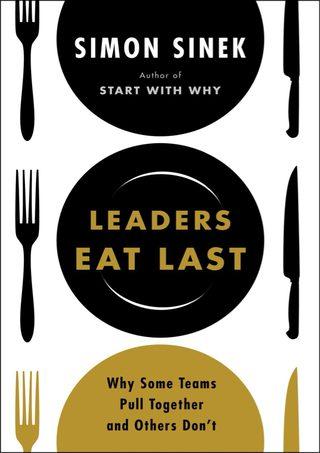
The circle. Leadership isn’t being in charge — it’s taking care of the people in your charge, and the first person in your charge is you. Build a Circle of Safety and people stop protecting themselves from you and start building with you. Trust first. Everything else sits on it.
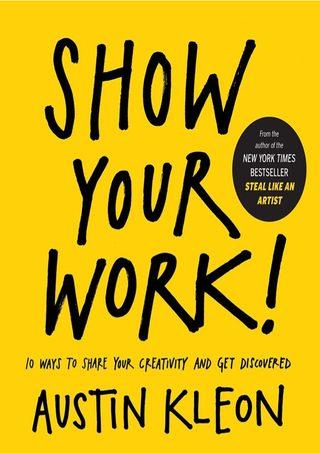
The window. It’s not enough to be good — you have to be findable. Share the process, not just the product. Something small, often. Teach what you know. Scenius over genius: your scene makes you, so feed it. Generosity is the entire strategy.
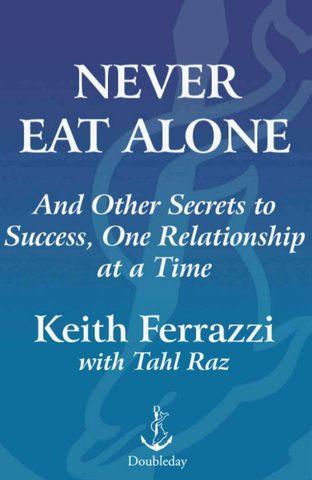
The room. Part B of this month — relationships as a capability, not the spine. Give before you get and never keep score. The people you already know and under-invest in are worth more than the strangers you’re chasing. One real investment a week beats a hundred cold DMs.
How they stack: Leaders Eat Last builds the circle — trust, starting with the trust you keep with yourself. Show Your Work! opens the window — people can see in, and what they see is the process, not a highlight reel. Never Eat Alone builds the room — on purpose, one relationship at a time, generosity first. Then you name what they're looking at: the Positioning Statement. Lead yourself, serve, be findable. Run them in that order and you stop waiting to be discovered and start being worth it.
The Work
Six exercises. Write, don't think. Be honest or don't bother. Budget 45 to 60 minutes — one sitting or one a day over a week. Exercise 1 runs across a full week, so start it early.
This stays with you. Nothing here gets submitted or seen by anyone. Be honest because it's for you, not because you're being checked.
For 7 days, count your promises. All of them — the “I'll send it tonight” to a client, the “I'm there at 9” to the crew, the “studio tomorrow, no excuses” to yourself. End of each day, tally: made and kept, or made and broken. Two rows for you, two for everyone else. The count does the rest.
| Promises | MON | TUE | WED | THU | FRI | SAT | SUN |
|---|---|---|---|---|---|---|---|
| To myself · kept | |||||||
| To myself · broken | |||||||
| To others · kept | |||||||
| To others · broken |
Most people keep their word to clients and break it to themselves, then wonder why they don't trust their own plans. Your word to yourself is the first circle. If it doesn't hold there, nothing you build outward holds either.
A Circle of Safety is the people you'd protect and who protect you — the ones who know your real numbers, your bad nights, the version of you that isn't on. Name them. Five, max. If you can't fill five, that's information, not failure.
Now the part you've been skipping. Where are you already leading without the title? Tick every room that's true.
You don't get to opt out of leading. You only get to choose whether you do it on purpose. Whoever's watching you is already learning something. Decide what.
Past month. Six interactions that mattered — a gig, a favour, a collab, a DM you answered or didn't, a moment with the crew. Then the honest mark: did you take first, serve, or neither?
Now this month. One act of service per week. No ask attached — not a favour you'll cash in later, a thing you do because you can.
Leaders eat last isn't a slogan, it's a tell. Watch who goes first when there's one slot, one plate, one credit. Then decide which one you're going to be when nobody's counting.
What are you making that nobody sees? Not the finished mix — the thing behind it. The crate you've been digging for a month, the edit that took three nights, the set you rebuilt after it flopped, the lesson you learned the hard way. List five pieces of process. Product doesn't count.
Now the 30-day sharing calendar. One piece a week, where people can actually find it. Small is fine. Unfinished is fine. Hidden isn't.
Scenius, not genius. Nobody good came up alone — there was a scene, and the scene made them. Name yours. Three people whose work makes yours better just by being near it.
You don't need a content strategy. You need to stop hiding. One piece of process a week, where people can find it. The work won't speak for itself. You have to open the door.
Ten people. Five you already know and under-invest in — the ones you keep meaning to call. Five you want to know — not to extract from, to learn from or build with. Names, not categories.
One genuine relationship investment per week. A meal, a call, an intro, a favour given. Generosity first. No scorekeeping — if you're tracking what they owe you, it isn't this.
Networking is what you do when you need something. Building the room is what you do when you don't. The difference shows up the day you actually need something — and by then it's too late to start.
One sentence. Who you are, what you do, who it's for. This is the line you say when somebody asks what you do and you stop mumbling. Three attempts, then circle the one. It won't be perfect. It has to be true — and you have to be able to say it out loud without flinching.
“I'm the [who] who [what] for [whom].”
“I'm worth following. Not because of a number — because I keep my word, I serve first, and I'm done hiding the work.”
You'll want to write a statement that sounds impressive. Write the one you'll actually say. A plain line you use beats a clever one you keep in a doc. This carries into October — because being findable means people find you, and then you need a system that holds when they do.
Lock In
Same person as G and O. If you still don't have one — that's three Bullshit Meters calling you on it, so handle it today. One person. Not a group chat. One human who'll keep it real with you and won't let you front.
This month you send them two things: your Positioning Statement (Exercise 6) and week 1's piece of shared work (Exercise 4) — the actual link, not a promise to post. Now somebody's seen the line and the first proof. That's the point. It's harder to go quiet when a real one is waiting on week 2.
Quick check-in. “Did I share the work this week? Did I keep my word? Who did I serve?” Five minutes, voice note, coffee, whatever.
Real sit-down. Read each other the statement out loud. Did it hold up? Which week went quiet, and who’s in the room now that wasn’t in August?
The buddy system is still the goal. But if you're doing this on your own for now, drop your email and I'll send a check-in around the halfway point of the month. Not a newsletter. Just a nudge to make sure you actually did it.
This was built as a buddy system. If you don't have your person yet, drop your email and I'll check in on you halfway through the month. Not a newsletter. Just a nudge.
The Bullshit Meter
End of the month, before you turn the page to Discipline. Nobody's watching. That's the point. Leadership is easy to fake inside your own head, because thinking about serving people feels almost the same as doing it.
You started showing up. Find the lowest score and fix it before October. Usually it’s the week you went quiet. Post the thing.
The Next Episode
You just did the thing most creatives never do: you stopped waiting to be discovered. You kept your word where you could count it. You served first. You put the process where people could find it, and you said out loud what you do and who it's for.
Here's what happens next, and it's the whole reason October exists: being findable works. People find you. The DMs pick up. The asks arrive — the collab, the favour, the gig that lands on the block, the person who wants “five minutes.” Exposure creates demand, and demand is the exact pressure that breaks a standard that only runs on a good mood.
Next month is D: Discipline. Not willpower — you already learned that dies by Thursday. Systems. The deep-work block that holds when three people want it. The non-negotiables that run whether you feel like it or not. The rest that's part of the discipline instead of the thing you skip to keep up. You spent three months building something worth protecting. October is where you build the thing that protects it.
You got visible this month. Next month you learn how to stay standing when visibility starts asking things of you.
See you in October. Bring the statement and the calendar.