The Setup
“Nobody is coming to protect your time. That job was always yours.”
This is a workbook. Same deal as last month: you write in it or you wasted your time. Month 1 you diagnosed. You found your ONE Thing and you put it on the calendar. This month is about what happens next — because the block you made in July has already been attacked. By clients, by group chats, by “quick favors,” by your own habits. Month 2 is where you take it back, raise the standard, and put it in writing.
By the end of this month you walk away with two things on paper: an honest map of where your time and energy actually go, and a signed Standards Charter — the document that says what you will and won't tolerate from yourself going forward. That charter travels with you through the rest of the arc.
You can do this on the page, download it, or have it sent to you. However you run it is fine. What matters is that you actually do it.
This is Month 2. If you landed here first, start at G — this month builds directly on the Growth Audit. The modules don't expire and the arc builds on itself: G → O → L → D → E → N.
Reality Check
Last month you found your one domino and you blocked time to hit it. So here's the only question that matters now: who's been getting those hours?
Be honest. The block got moved for a client. Then it got eaten by an inbox. Then a “you got five minutes?” turned into ninety. And every time, there was a reason, and every reason had someone else's name on it. That's the trap. As long as the reason has someone else's name on it, you never have to change anything.
So this month we kill the reasons. Here's the frame, and it's going to sting before it frees you: everything on your plate is there because you allowed it. The overbooked calendar — you said yes to all of it. The client who texts at midnight — you answered at midnight once, and you trained them. The energy you don't have at noon — look at what you did to yourself at 3 a.m. None of that is an accusation. It's the opposite. Because if it's all stuff that happens to you, you're a passenger. If you own it, you can change it. Blame feels better for a day. Ownership works for a lifetime.
And underneath all of it sits one word: standards. Your results are downstream of your standards — not your goals, not your talent, your standards. What you tolerate is what you train. Every time you let the block slide, answer the midnight text, run on four hours and call it hustle, you're not having a bad day. You're setting a standard. The work this month is raising it on purpose instead of lowering it by accident.
For me the wake-up was a month where, on paper, I killed it. Booked every weekend, sessions through the week, favors for half the city. Then I opened the calendar at the end of the month and looked for the hours that went to the one thing I said mattered most — and they weren't there. Not reduced. Gone. I hadn't lost that time. I'd given it away, one yes at a time, and called it being busy. The month was full and the mission got nothing. That's when it clicked: nobody stole anything from me. I was funding everyone's priorities except mine.
Time isn't your only asset either. You can guard your hours perfectly and still show up to them empty because you've been treating your body and your attention like a rental car. Energy is the second asset, and it gets spent the same way — by default, unless you own it.
Own, cut, systemize. That's the month. The work below walks you through all three and ends with your name on a charter.
Phone in another room. You know the drill by now.
The Blueprint
Three books built this month. You don't need to read all three right now, though they're worth it. Here's the single playbook they make when you stack them.
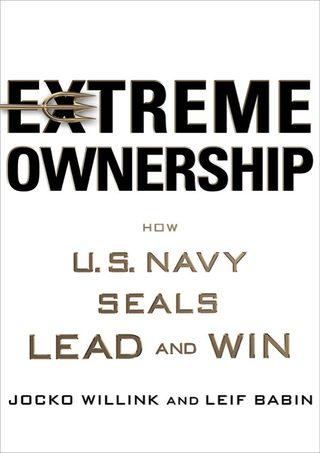
The mirror. Two Navy SEAL commanders, one non-negotiable rule: leaders own everything in their world. There are no bad months, only unowned ones. Find your part — it’s the only part you can fix.
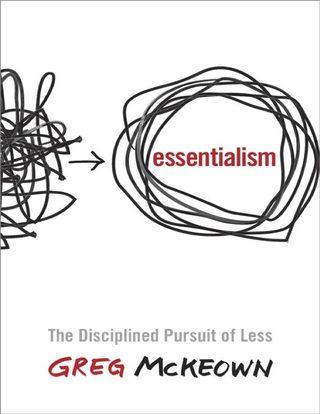
The knife. Almost everything is noise, and if you don’t prioritize your life someone else will. The filter is brutal by design: if it isn’t a clear yes, it’s a clear no. And protect the asset — you are the instrument.
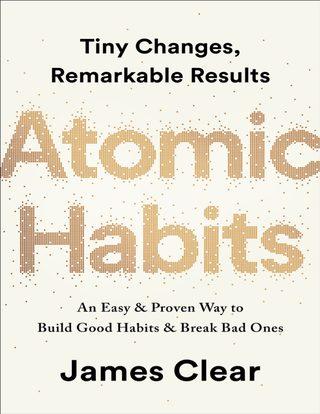
The system. You don’t rise to the level of your goals, you fall to the level of your systems. Every action is a vote. Stack the habit, shrink the start, make the right thing obvious and the thief invisible.
How they stack: Extreme Ownership hands you the deed — it's all yours now, no more landlords. Essentialism clears the land — cut what doesn't deserve to be there. Atomic Habits builds the fence and runs the daily patrol. Then you sign the deed: the Standards Charter. Own, cut, systemize. Run them in that order and the exercises below are just you signing the paperwork.
The Work
Six exercises. Write, don't think. Be honest or don't bother. Budget 45 to 60 minutes — one sitting or one a day over a week. Exercise 2 runs across a full week, so start it early.
This stays with you. Nothing here gets submitted or seen by anyone. Be honest because it's for you, not because you're being checked.
List 3 things from the last month that went sideways, stalled, or didn't happen. If you ran the Growth Audit, the first entry writes itself: what happened to your ONE Thing hours? For each one, write the story you've been telling — then rewrite it with your name on it. Same facts, your part of them.
Example: “The client kept calling during my block” becomes “I answered.” “The month got crazy” becomes “I said yes to things I should have declined.” One is weather. The other is a decision you can make differently.
This is not about beating yourself up. It's an inventory of power. Every sentence that starts with “I” is a sentence you can change.
For 7 days, keep receipts. Not a plan — an accounting. End of each day, rough hours into these buckets. Estimates are fine. Lies are not.
| Bucket | MON | TUE | WED | THU | FRI | SAT | SUN |
|---|---|---|---|---|---|---|---|
| My ONE Thing / craft | |||||||
| Paid work / gigs | |||||||
| Admin / inbox / messages | |||||||
| Other people’s asks | |||||||
| Scrolling / numbing | |||||||
| Real rest (restores you) |
Your calendar is a bank statement. It doesn't care what you claim your priorities are — it shows where you actually spent. The gap between your mouth and your receipts is the exact size of your ownership problem.
You can win every hour back and still show up to them empty. Score your energy accounts, 0 to 10, as they actually are this month.
Now draw the energy map. Everyone has a window where the good work happens and a zone where nothing does. Most people give their window away and try to create in the dead zone.
Late nights come with the work — that's real. Which is exactly why the recovery around them can't be left to chance. You'd never run your gear at redline every night and act surprised when it fails. Same machine. Same rules. And from now on, your ONE Thing block lives inside your peak window. That's what it means to own the inputs.
List what's currently on your plate — commitments, standing favors, projects, asks you've already half-agreed to. Then run the filter. Score each one 1 to 10: how much does this actually matter to where you're going, and do I actually want it?
Every yes spends hours you already promised to your ONE Thing. You're not saying no to them — you're saying yes to the thing you swore mattered. The no you keep avoiding is the tuition for this whole month.
Ownership that depends on how you feel that day is rented. You make it permanent by wiring it to who you are, shrinking it until it's too small to skip, and building the environment so the right thing is the default.
Now wire the loop. Every habit runs on four beats — name yours for the ONE Thing block.
The rule when you miss (and you will): never twice. Miss once, that's life. Miss twice, that's the start of a new identity — the wrong one.
You don't need to be perfect. You need the votes to keep landing on the right side. Identity is just the count — and you're the one holding the ballot box.
What you tolerate is what you train. This is the piece of paper that outlives August. Not goals. Standards. A goal is something you chase. A standard is something you refuse to live below.
“My results are downstream of my standards. These are mine now. I don't negotiate them down for anyone's convenience — including my own.”
You'll be tempted to write standards you can post instead of standards you can keep. Don't. A modest standard you hold beats an impressive one you visit. This charter comes with you into September — leadership is just standards made visible.
Lock In
If you locked in last month, you already have your person. Keep them. If you didn't — the Bullshit Meter already called you on it, so handle it now. One person. Not a group chat. One human who'll keep it real with you and won't let you front.
This month you send them two things: your one big no (Exercise 4) and your Standards Charter (Exercise 6). Now someone else knows exactly what you're protecting and the standard you claimed. That's the point. It's harder to quietly fold when a real one has the receipts.
Quick check-in. “Did I hold the standard this week? Yes or no. What or who tested it?” Five minutes, voice note, coffee, whatever.
Real sit-down. Walk the whole inventory. Did the receipts change? Which standard slipped, and what’s getting cut next month?
The buddy system is still the goal. But if you're doing this on your own for now, drop your email and I'll send a check-in around the halfway point of the month. Not a newsletter. Just a nudge to make sure you actually did it.
This was built as a buddy system. If you don't have your person yet, drop your email and I'll check in on you halfway through the month. Not a newsletter. Just a nudge.
The Bullshit Meter
End of the month, before you turn the page to Leadership. Nobody's watching. That's the point. Ownership is the easiest month of the six to fake, because talking about accountability feels almost the same as having it.
You started claiming it. Find the lowest score and fix it before September. Usually it’s the no you didn’t send. Send it.
The Next Episode
You just did the second thing most people never do: you put your name on your own life. You stopped renting your hours out for free. You cut what didn't deserve you, you wired the system, and you signed a standard with your name on it.
Here's what you might not have noticed yet: people are watching. The moment you start moving like someone who owns their time — keeping your word to yourself, holding a standard, saying clean nos — you stop just managing yourself. You start setting a pace. That's not a personality trait. It's a byproduct of what you just built.
Next month is L: Leadership. Leadership does not start with a title, a team, or a following. It starts with being someone worth following — and you've spent two months becoming exactly that. September is where it turns outward: influence, service, communication, showing your work, and building the room of people around you on purpose instead of by accident. Your charter was for you. Leadership is what happens when your standards become visible.
You claimed the assets this month. Next month you learn what they're worth to everyone else.
See you in September. Bring the receipts and the charter.